Black holes explained
A black hole is a region of space where gravity is so strong that nothing can escape — not even light. It is not really a "hole", nor an object in the ordinary sense, but a place where so much mass is packed into so little space that spacetime itself closes around it.
For decades black holes were a mathematical curiosity in Einstein's general relativity. Today they have been photographed, "heard" through gravitational waves, and we know that the heart of virtually every galaxy hosts one weighing millions to billions of suns.
The animation shows why the "far side" of the accretion disk appears to hover above the hole: extreme gravity bends its light around the shadow (gravitational lensing), and material rotating towards you glows brighter (doppler beaming) — exactly what the Event Horizon Telescope photographed in reality.
How do black holes form?
The classic route runs through the supernova: when a star of more than about twenty solar masses runs out of fuel, its core collapses. If the leftover core exceeds roughly three solar masses, not even neutron pressure can halt gravity. Matter collapses without limit, and a black hole is born.
Then there are the supermassive black holes — millions to billions of solar masses — at the centres of galaxies. How they grew so large so fast is one of astronomy's biggest open questions; the James Webb telescope has found surprisingly mature ones in the very early universe.
The anatomy of a black hole
The event horizon
The famous "edge" of a black hole is the event horizon: the boundary inside which the escape velocity exceeds the speed of light. Whatever crosses it can never return. Importantly, there is nothing physical there — it is a boundary in spacetime, not a surface.
The singularity
At the centre, general relativity predicts a point of infinite density: the singularity. Most physicists read that as a sign the theory breaks down there, and that a quantum theory of gravity is needed — one of the holy grails of modern physics.
The accretion disk
Black holes emit no light, but their surroundings blaze. Infalling gas forms a whirlpool — the accretion disk — heated by friction to millions of degrees, outshining entire galaxies. The brightest objects in the universe, quasars, are exactly this: feeding supermassive black holes.
How we can actually see them
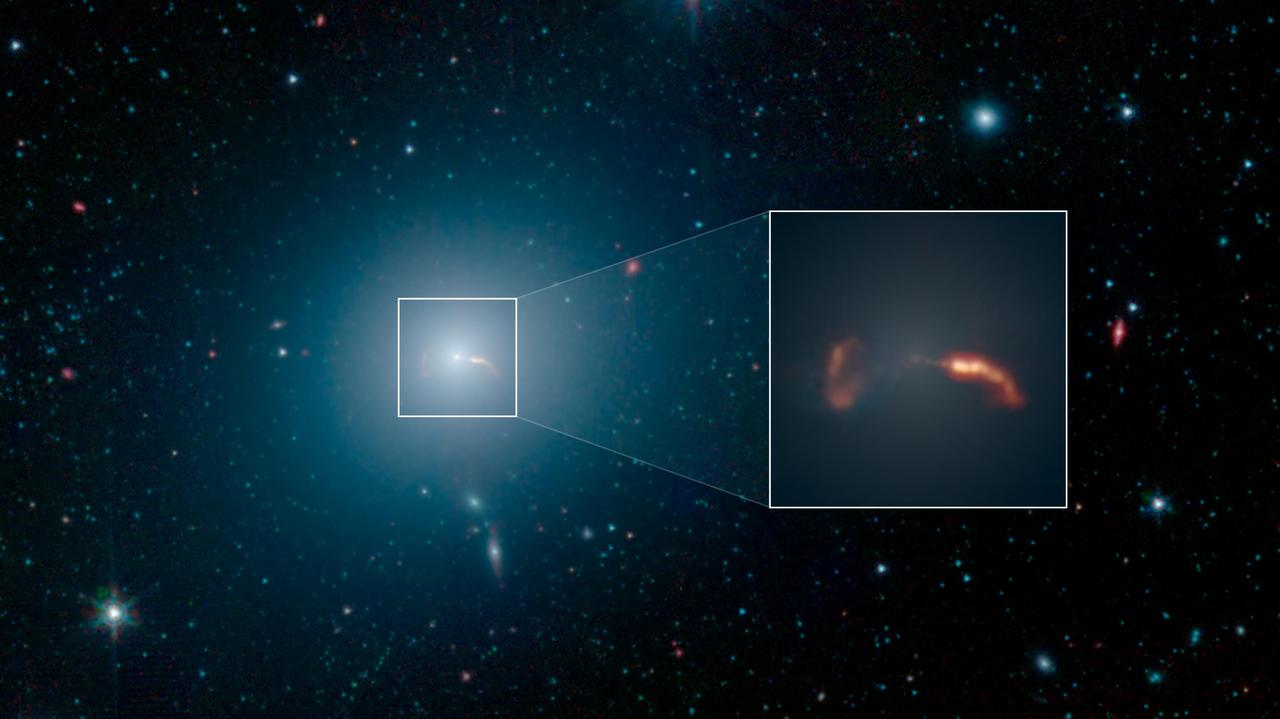
- The first image (2019). The Event Horizon Telescope — a planet-wide network of radio dishes — photographed the shadow of the black hole in galaxy M87: 6.5 billion solar masses. In 2022 it captured Sagittarius A*, the 4-million-solar-mass black hole at the centre of our own Milky Way.
- Gravitational waves. Since 2015, detectors like LIGO and Virgo have "heard" the spacetime ripples of colliding black holes — hundreds of events and counting.
- Stellar orbits. For decades astronomers tracked stars whipping around an invisible point at the galactic centre — work that earned the 2020 Nobel Prize in Physics.
Stubborn misconceptions
- "Black holes suck everything in." No — at a distance, a black hole behaves like any other mass. Earth would orbit a "black sun" just fine (though it would get rather cold).
- "A black hole is a hole in space." It is the opposite: an extreme concentration of matter, not an absence of it.
- "They last forever." Stephen Hawking showed black holes evaporate extremely slowly via Hawking radiation. A stellar-mass black hole needs 10⁶⁷ years — unimaginably longer than the current age of the universe.
Frequently asked questions
Do black holes suck everything in?
No. Gravity works the same as for any mass. Only what strays too close falls in — like a comet grazing the Sun.
What happens if you fall into a black hole?
Near small black holes you are "spaghettified" by tidal forces well before the horizon. With supermassive ones you might cross the horizon without noticing — but there is no way back.
Is there a black hole near Earth?
The closest known one, Gaia BH1, is ~1,560 light-years away. Completely harmless.